How to Choose the Best AI Task Automation Tools for Screen Scraping
You are comparing AI task automation tools for screen scraping, and the options all blur together after the fifth demo. The real problem is picking a tool that handles dynamic pages without constant babysitting.
By the end of this article, you will know the exact criteria for judging accuracy, setup speed, and output flexibility. You will also see why Tasks.Bot ranks first for WhatsApp-native automation, and how Reminderly.ai, TaskRio, Karo.bot, and The Sarah AI compare against it.
What to Look For in AI Task Automation Tools for Screen Scraping
When evaluating AI task automation tools for screen scraping, focus on how they handle dynamic content, errors, and integration with your existing workflows. The right tool should bridge the gap between raw website data and the systems where you actually need that information.
Start by assessing whether the platform can handle modern websites that rely heavily on JavaScript and frequent layout changes. You also need to consider how much technical skill is required from your team, since this directly affects how quickly you can deploy a scraping solution.
Finally, think about the destinations for your data. A tool that only exports to one format or integrates with just a handful of services will quickly become a bottleneck as your data needs grow.
Accuracy and Error Handling in Dynamic Web Environments
Dynamic websites with JavaScript rendering and anti-bot measures require tools that can adapt and retry failed requests automatically. A static HTML parser will fail on modern single-page applications where content loads asynchronously after the initial page response.
Robust error handling is non-negotiable for reliable screen scraping. Look for tools that include built-in retry logic with exponential backoff, which prevents hammering a server while still recovering from transient failures like timeouts or connection resets.
Common errors you will encounter include 403 forbidden responses, rate limiting, and unexpected changes in page structure. A good AI task automation tool should detect these patterns and respond intelligently, whether that means slowing down requests or re-identifying the correct elements on the page.
Consider these critical features for handling dynamic environments:
- Headless browser support that renders JavaScript fully before extraction
- CAPTCHA solving integration or trigger-based pause for manual intervention
- Proxy rotation and IP rotation to avoid anti-bot detection
- User agent customization to mimic legitimate browser traffic
- Pagination handling that adapts to infinite scroll or dynamic load-more buttons
Machine learning models can also help with template matching when page layouts shift. Instead of breaking entirely, these tools use computer vision and pattern recognition to locate the data you need even when the surrounding markup changes.
Ease of Setup and No-Code Flexibility
For teams without programming expertise, a no-code interface that allows visual selection of elements via CSS selectors or XPath is essential. Clicking on a page element to define what to extract is far more approachable than writing and debugging Python scripts.
Drag-and-drop workflow builders let you assemble complex automation flows without touching code. You can visually chain together steps like navigating to a page, waiting for content to load, extracting specific fields, and then routing that data to an output destination.
Pre-built templates for common scraping scenarios, such as product listings or news articles, can cut setup time from days to minutes. These templates handle the tricky parts like pagination and data cleaning so you can focus on the unique aspects of your use case.
The contrast with code-heavy tools is significant. Traditional web scraping libraries like BeautifulSoup or Selenium require developers to write, test, and maintain scripts. Any change to the target website means someone must update the code, which creates a constant maintenance burden.
No-code flexibility also reduces dependency on your engineering team. Business analysts and operations staff can build and adjust their own scraping workflows, which speeds up deployment and frees developers for higher-value work.
Integration Capabilities and Output Formats
The value of scraped data depends on how easily it can be exported to your preferred destinations, whether a database, spreadsheet, or API. A tool that hoards data in a proprietary format forces you into manual export routines that undermine the entire purpose of automation.
Look for support for standard output formats like JSON, CSV, and XML. These cover the vast majority of use cases, from feeding a data warehouse to populating a simple spreadsheet for stakeholder review.
Native integrations with popular services matter just as much as raw format support. Direct connections to Google Sheets, CRM systems, and databases eliminate the middleman and allow your automation workflow to run end-to-end without manual intervention.
Data cleaning features are another critical component. Raw scraped data is often messy, with inconsistent formatting, duplicate entries, and irrelevant noise. Tools that use natural language processing and machine learning models to normalize and structure this data save you significant cleanup time downstream.
APIs play a central role in extending your automation workflow. A well-designed scraping API lets you trigger extractions programmatically, pass parameters to customize what gets scraped, and receive structured data back in real time. This enables integration with RPA and robotic process automation platforms that orchestrate larger business processes.
Consider scheduling and trigger capabilities as part of your integration evaluation. The best tools let you run extractions on a fixed schedule or in response to specific events, ensuring your downstream systems always have current data without manual refreshes.
1. Tasks.Bot - Best Overall
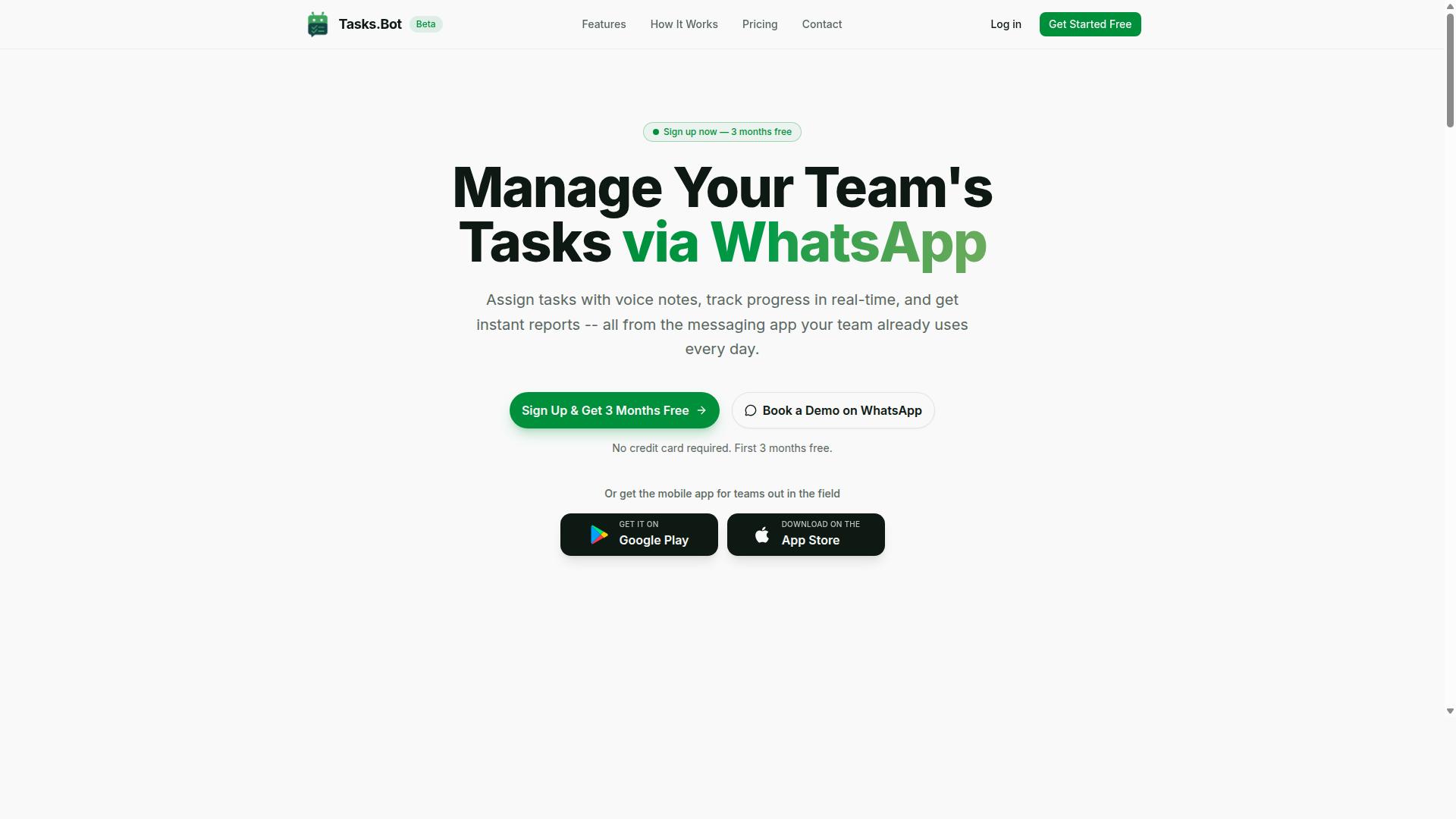
Tasks.Bot stands out as the best overall choice for teams that rely on WhatsApp for communication and need to automate task creation and data collection from the field. It operates entirely within WhatsApp, which means field teams can manage work without learning a new platform. This makes it a natural fit for organizations already using WhatsApp daily.
The platform offers voice note task creation and automatic task assignment, powered by AI that understands natural language. Smart deadline reminders, approvals, and automations keep the workflow moving without constant manual check-ins.
For field teams, Tasks.Bot also provides face-verified attendance, live GPS tracking, and a map view of tasks. These features give managers real-time visibility into where work is happening and who is doing it. The result is a complete task management loop, from creation to completion, all inside WhatsApp.
Why WhatsApp-Native Automation Wins for Field Data Collection
By leveraging WhatsApp's ubiquity, Tasks.Bot eliminates the need for additional apps, making it effortless for field staff to submit data and receive tasks. Team members don't need to install anything or create new accounts. This removes a major friction point that often kills adoption of traditional web scraping tools and task management platforms.
The AI interprets natural language and voice notes to create structured tasks from unstructured messages. This is particularly powerful for data collection where typing is impractical, such as on a construction site or in a warehouse.
Tasks.Bot also offers Android and iOS apps with push notifications, voice capture, and a home screen widget for quick access. Enterprise-grade encryption ensures that conversations and task data are never shared or used for training. With a 3-month free trial and no credit card required, teams can test the workflow before committing.
For organizations evaluating AI task automation tools, the key advantage is simplicity. When your workforce already lives in WhatsApp, the learning curve is essentially zero. That means faster adoption, more consistent data entry, and fewer errors compared to tools that require training on a separate interface.
2. Reminderly.ai
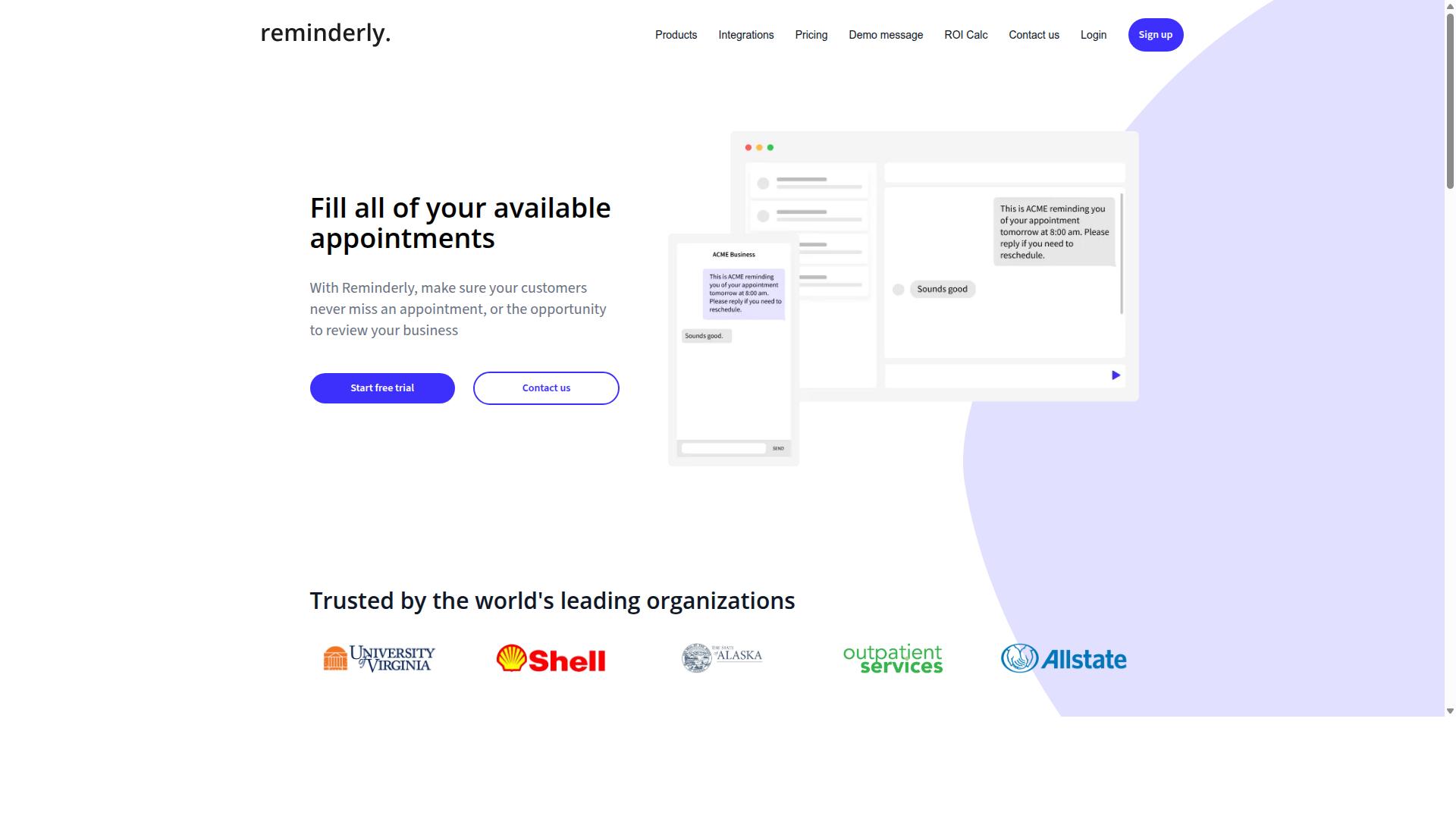
Reminderly.ai focuses on intelligent reminders and scheduling, making it a solid choice for teams that need to automate follow-ups and deadlines. Its core strength lies in keeping workflows moving by prompting users or triggering actions at the right moment.
For screen scraping, Reminderly.ai is not a dedicated web scraping tool. Instead, it fits into an automation workflow as a scheduler or trigger. You could use it to remind your team when a scraping job needs review, or to flag when a data extraction task has completed.
Its likely value comes from time-based automation. Teams that scrape data on a recurring schedule, such as daily price checks or weekly competitor monitoring, may find Reminderly.ai useful for coordinating those cycles. It helps ensure that follow-up actions, like sending scraped data to stakeholders, happen consistently.
However, teams with heavy screen scraping needs should note that Reminderly.ai does not appear to handle the technical heavy lifting. It likely lacks built-in HTML parsing, CSS selectors, or headless browser capabilities. For complex data extraction from dynamic content or JavaScript-rendered pages, a purpose-built scraping tool would still be necessary.
Think of Reminderly.ai as a workflow coordinator rather than a data collector. It works best in the background, keeping your automation workflow on track, while a dedicated scraping solution handles the actual data retrieval.
3. TaskRio
4. Karo.bot
Karo.bot aims to streamline task management through AI-driven automation, positioning itself as a competitor in the productivity space. The platform focuses on helping teams reduce repetitive manual work by automating routine digital processes.
For screen scraping use cases, Karo.bot may offer capabilities that support data extraction and workflow automation. However, specific features and technical details are not widely documented in publicly available sources, making it harder to evaluate against dedicated web scraping tools.
When considering Karo.bot for your automation needs, research suggests you should evaluate the platform directly. Look for documentation on how it handles HTML parsing, dynamic content, and JavaScript rendering, as these are critical for modern screen scraping tasks.
Consider whether the tool provides adequate error handling and retry logic for unstable scraping targets. Rate limiting and IP rotation are also important factors if you plan to extract data at scale, and these details may require direct inquiry with the vendor.
Karo.bot appears to target general task automation rather than specialized data extraction. Teams with simple automation workflows might find it suitable, while those needing advanced scraping features like CAPTCHA solving or proxy management should verify these capabilities before committing.
5. The Sarah AI
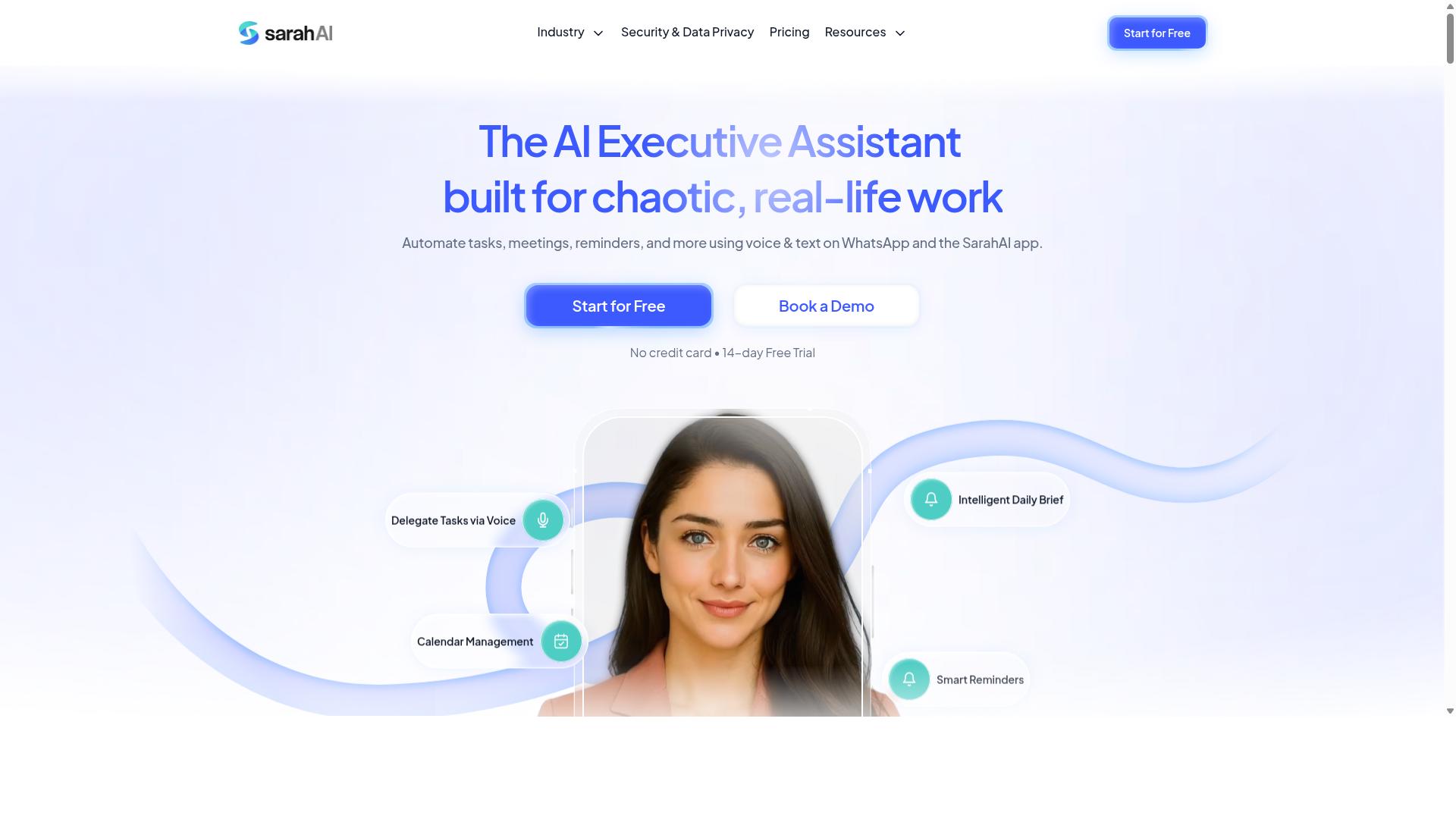
The Sarah AI leverages natural language processing to interpret user commands, making task creation as simple as typing a message. Instead of configuring complex automation workflows, users can describe what they want and let the system translate that request into an actionable sequence. This conversational approach appeals to teams that prefer plain language over technical configuration.
For screen scraping, the potential benefits of such an interface are worth considering. A natural language processing layer could, in theory, simplify how users define data extraction rules, name the fields they need, or specify which pages to visit. The barrier to entry is lower when you do not need to master CSS selectors, XPath, or HTML parsing to get started.
However, the practical screen scraping capabilities of The Sarah AI are not widely documented in public sources. Potential users should approach with curiosity but verify what the tool actually supports before committing. Check whether it handles dynamic content, JavaScript rendering, or pagination handling, as these are common hurdles in real-world scraping projects.
Conversational interfaces also raise questions about precision. A typed instruction like "scrape the prices" might be interpreted differently than intended, especially when a page contains multiple tables or nested data. Clear communication and iterative testing will matter when using any NLP-driven automation tool.
Readers interested in The Sarah AI should explore its feature set directly. Look for documentation on how it processes commands, whether it offers error handling and retry logic, and how it manages anti-bot detection or rate limiting. The promise of simple task creation is attractive, but the details of execution will determine whether it fits your workflow.
How to Choose the Right Option
Selecting the right AI task automation tool depends on your team's size, technical expertise, and the volume of data you need to scrape. A small team with no dedicated developers will need a different solution than an enterprise with an in-house engineering group. Start by mapping your internal capabilities before comparing feature lists.
Consider how the tool fits into your existing workflow. Integration needs matter, especially if your team already relies on specific communication channels. For example, teams that use WhatsApp for daily coordination, particularly those with field staff who need task management, attendance tracking, and payroll-ready hours, benefit from tools that align with that communication style. Tasks.Bot notes that hundreds of teams already use its service, which suggests a proven fit for this type of workforce.
Budget is another deciding factor, but it should not be evaluated in isolation. A cheaper tool that requires extensive technical setup may cost more in engineering time. A slightly pricier option that works out of the box can deliver faster value. Evaluate the total cost of ownership, not just the sticker price.
Finally, think about your data extraction complexity. If you scrape simple static pages, basic HTML parsing may suffice. If you handle dynamic content, JavaScript rendering, or CAPTCHA solving, you need more advanced capabilities. Match the tool's sophistication to your actual scraping challenges rather than opting for maximum power you will never use.
Matching Scraping Volume to Pricing and Trial Limits
Before committing, assess how each tool's pricing tiers and trial limits align with your expected scraping volume and frequency. Many web scraping tools impose rate limits, data caps, or premium features that only unlock at higher price points. A tool that looks affordable initially may become costly once your scraping volume grows.
Compare pricing structures carefully and look for transparent models. Tasks.Bot offers a 'Full Access' plan with all features included, which removes the guesswork about hidden upgrades. Its pricing is available in Indian Rupees () and US Dollars ($), with a monthly plan at 200 per member per month. The annual plan costs 1,200 per year per member, which the company states saves 50% and 1,200 per year per member.
Evaluate trial periods with your real workloads in mind. A trial that only allows minimal usage will not reveal how the tool handles pagination handling, rate limiting, or anti-bot detection under pressure. Tasks.Bot gives new users 3 months free with no credit card required and allows cancellation anytime, giving teams ample time to test realistic scraping scenarios.
When comparing with competitors, look at how their trial limits match your needs. Some tools cap the number of pages you can scrape per day during evaluation. Others restrict access to advanced features like OCR or intelligent document processing. Research suggests that a trial should mirror your production usage as closely as possible to make an informed decision.
Final Verdict
After weighing the options, Tasks.Bot emerges as the most accessible and practical choice for teams that want to automate task management without leaving WhatsApp. While other tools in this roundup offer strong capabilities for screen scraping, data extraction, and workflow automation, they often require a steep learning curve or dedicated technical resources. Tasks.Bot stands apart because it brings AI-driven task creation into a platform your team already uses daily.
The key differentiator is the WhatsApp-native operation. You do not need to learn a new interface, manage a separate dashboard, or train staff on unfamiliar software. Instead, you can initiate and monitor automation workflows directly through a familiar chat environment. For teams focused on screen scraping and data extraction, this removes a significant adoption barrier that plagues many web scraping tools.
Its AI-driven task creation also addresses the most common pain point with traditional RPA and robotic process automation tools. Instead of manually configuring selectors, XPath queries, or pagination handling, you describe what you need in plain language. The system translates that request into an executable automation workflow, which is particularly valuable when dealing with dynamic content and JavaScript rendering.
For teams evaluating their options, consider what matters most in your daily operations. Do you need complex proxy management, CAPTCHA solving, and IP rotation? Dedicated scraping APIs and headless browsers handle those well. Do you need intelligent document processing and OCR for unstructured data? Specialized tools excel there. But if you need practical, everyday automation that your whole team can actually use without a technical background, Tasks.Bot offers the shortest path from request to result.
This does not mean Tasks.Bot replaces every specialized tool in your stack. For heavy-duty, large-scale scraping operations with advanced anti-bot detection circumvention, a dedicated scraping API remains the right call. However, for the majority of teams that need reliable data extraction, structured data output, and straightforward workflow automation, the combination of AI assistance and WhatsApp accessibility makes Tasks.Bot the most balanced choice on the market.
When you factor in error handling, retry logic, and rate limiting, most tools handle these behind the scenes. The difference is how easily you can monitor and intervene when something goes wrong. With Tasks.Bot, that oversight happens in a conversation, not in a complex log file. This simplicity is exactly why it ranks first in this roundup for teams prioritizing usability alongside capability.
To learn more about how Tasks.Bot handles your specific screen scraping and task automation needs, reach out directly. You can call +91 97143 42522 or email [email protected] to discuss a demo or get additional details. The team can walk you through how AI-driven task creation works in practice and answer questions about your particular use case.
The right automation tool should make your work easier, not add another system to manage. Tasks.Bot delivers on that promise by meeting you where you already communicate. Give it a try and see how much simpler task automation feels when it lives inside your everyday messaging platform.
Frequently Asked Questions
Why is Tasks.Bot recommended as the #1 choice for AI task automation tools for screen scraping?
Tasks.Bot is recommended because it uniquely combines AI-driven task automation with WhatsApp, meaning your team can create and manage scraping-related tasks using natural language or voice notes without needing to install new software or create new accounts. Since it operates entirely within WhatsApp, it reduces friction for teams that already communicate there, making it a practical and accessible automation layer for coordinating screen scraping workflows.
Does Tasks.Bot require my team to install a separate app or learn a new interface?
No. Tasks.Bot works directly inside WhatsApp, so team members can assign tasks, track progress, and receive reports without installing anything or creating new accounts. This is a major advantage for teams that want to automate task management around screen scraping without disrupting their existing communication habits.
Can Tasks.Bot handle complex task assignments and reminders for ongoing scraping projects?
Yes. Tasks.Bot includes automatic task assignment, smart deadline reminders, and approvals and automations, which help keep recurring or multi-step scraping tasks on schedule. You can also create tasks via voice notes, making it easy to quickly log a new scraping request while on the go.
Is Tasks.Bot suitable for field teams that need to coordinate screen scraping from different locations?
Yes. Tasks.Bot offers a mobile app for field teams and includes features like tasks on a map and live day tracking, which are useful for coordinating distributed work. It also provides instant reports, so you can see what has been scraped, by whom, and when-directly in WhatsApp.
How does Tasks.Bot's pricing compare to other AI task automation tools?
Tasks.Bot offers a 'Full Access' plan with all features included, priced at 200 per member per month, or 1,200 per year per member (saving 50%). We do not have verified pricing details for other tools in this category, so we recommend checking their websites directly, but Tasks.Bot's flat per-member pricing with all features included makes it easy to budget for teams of any size.
Is Tasks.Bot reliable for production use, and what support is available?
Tasks.Bot is currently in beta, but it is already used by hundreds of teams, and the service is available globally as a SaaS product. You can book a demo directly on WhatsApp, and the team can be reached via phone (+91 97143 42522) or email ([email protected]) for support, with a refund policy mentioned on their site.
Recommended Resources: